

Do people value happiness differently across cultures?

For someone who lives in a South Asian country, I feel like the West doesn’t always have an accurate picture of what life here actually looks like. There are a lot of assumptions that get made without a real understanding of the day-to-day experience. I don’t think it’s anyone’s fault. I’m sure I also have my own version of what life in the West is like, and the reality is probably very different.
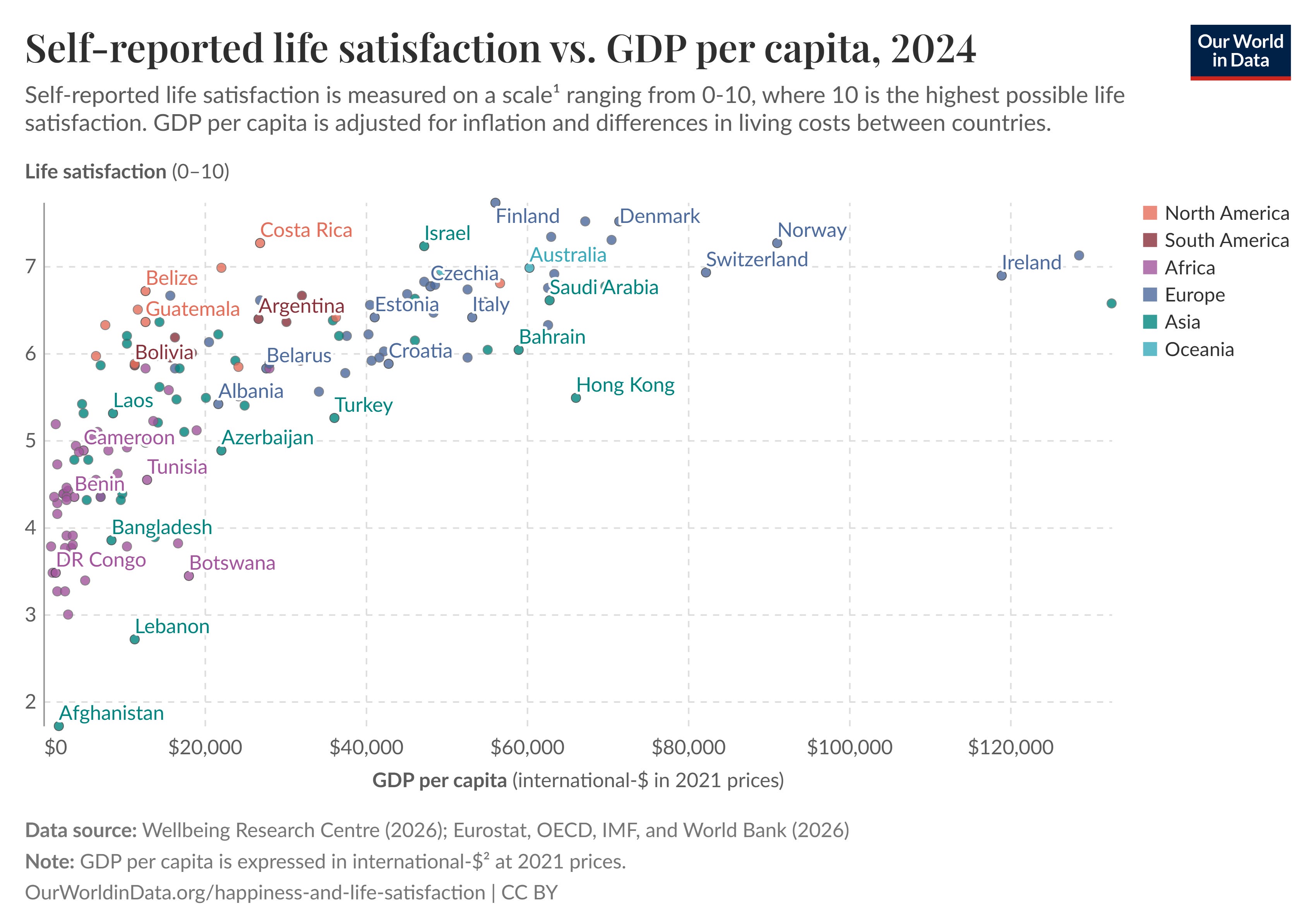
I was listening to a discussion about the relationship between GDP per capita and the Happiness Index across different countries. They noticed that many Asian countries don’t rank as highly on the happiness scale as European or North American countries with similar GDP per capita.
It made them wonder whether happiness simply isn’t as important a goal in Asian cultures.
That explanation didn’t sit right with me.
Culture absolutely shapes how we think, what we value, and how we express emotions. But I don’t think it explains the whole picture. GDP per capita tells us what an economy looks like on average. It doesn’t tell us how evenly that money is distributed. Two countries can have the exact same GDP per capita while everyday life feels completely different because one has far greater inequality than the other.
I don’t think people have different goals when it comes to happiness. I think different circumstances make certain goals harder to reach. When you’re trying to survive, happiness doesn’t suddenly stop mattering. Survival just becomes louder. Even in countries with a higher happiness rating, if someone is struggling to survive, their priorities will be different.
When you don’t know how you’re going to pay next month’s rent,
whether you’ll be able to clear another EMI, or
whether your salary will stretch until the end of the month,
Your mind naturally focuses on those problems first. It isn’t because happiness has become less valuable. It’s because survival demands your attention.
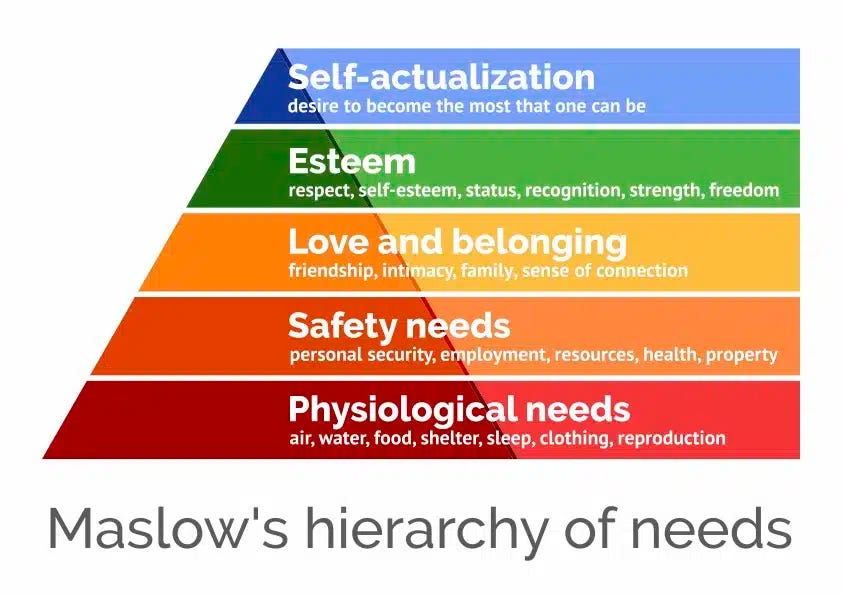
Maslow’s hierarchy isn’t a complete explanation of human behaviour, but it points towards something important. Before we think about fulfilment, meaning, or self-actualisation, our minds keep returning to safety and security. Not because we don’t want more from life, but because uncertainty is difficult to ignore.
So am I saying that if your basic needs aren’t met, you shouldn’t think about happiness? Not at all. I believe everyone deserves happiness.
There’s a quote I love:
“If you have two pennies, spend one on bread and one on flowers. Bread will feed your body, but flowers will feed your soul.”
I really do want to live by that. But when you only have half a penny, and bread itself costs half a penny more, flowers stop feeling like a choice. They begin to feel like a luxury that belongs to somebody else’s life.
I’ve seen this up close. My family experienced a massive financial loss, and over the years my parents accumulated debt after debt to pay for my education and my sibling’s. Every month became a calculation. Which bill gets paid first? How do we manage the next EMI? Can we afford one unexpected expense?
Going out for dinner or buying something we didn’t absolutely need wasn’t impossible, but it carried a weight that people don’t always see. Sometimes we could. Sometimes we couldn’t. It is something that we are still living with. Some months make it seem like we are doing better and one unexpected expense put us back again. I realise that we have been far more fortunate than many families around us. We had the opportunity to complete our education, and I don’t take that for granted.
When I step outside, I see people carrying burdens much heavier than mine. I see people working two jobs because five other people depend on them. I see elderly men pulling cycle rickshaws themselves because buying an e-rickshaw isn’t even a possibility. An e-rickshaw could change their daily life completely, but the upfront cost is simply out of reach.
When I look at them, I don’t think they value happiness any less. I see people with far less room to think about it.
I think they would love one day where they didn’t have to think about debt.
One day where they weren’t calculating expenses in their head.
One day where tomorrow didn’t feel so uncertain.
And despite all of that, I still see happiness. I see people laughing over tea outside tiny shops. Families celebrating festivals even when money is tight. Children finding ways to play with almost nothing. Happiness still exists. It hasn’t disappeared.
It just has to compete with survival.

That’s why I struggle when we explain differences in happiness by saying people simply have different goals because of culture. Sometimes behaviour tells us far less than circumstances do. From the outside, it can look like someone values work more than joy, responsibility more than rest, or survival more than happiness. But living through it feels very different. The goal isn’t different. Survival just takes so much space that thinking about anything else becomes impossible.
Reading this back before sending it, I realised it raises a question I have been thinking about a lot lately. How to build work that stays accessible while still being sustainable? I don’t ever want money to be the reason someone doesn’t begin understanding themselves. At the same time, I also know that if this work isn’t sustainable, I won’t be able to keep doing it for very long. That’s the balance I’ve been trying to find.
On July 7th, I’ll be leaving my full-time job to do this work full time. With that change, the prices for my paid offerings will increase. The work itself isn’t changing, but the time and attention I am able to give each person is. Until July 7th:
The Loop Mapper : $9 (this will stay the same)
Loop Breaker Analysis: $19 (becomes $39)
Email Deep Dive : $49 (becomes $79)
Pattern Breakdown Session : $95 (becomes $149)
Monthly Container : $250 (becomes $499)
If you’ve been thinking about working together, this week is the lowest these prices will ever be. If this is your first time working with me, I would recommend starting with The Loop Mapper. That’s where I would start too. I created it to help you understand one recurring emotional pattern before deciding whether you want to go deeper.
If you’d rather talk things through first, you can also book a Free 15 minute Discovery Call. No obligation, just a conversation to figure out what would actually be helpful.
And if paying for anything isn’t possible right now, Anonymous Loop Breakers will continue every Friday, completely free. You can submit a situation anonymously, and I choose a few each week to break down for everyone to learn from.
If you’re unsure which option fits your situation, just reply to this email. I’ll tell you honestly, even if my answer is that you don’t need anything I am offering right now.